“Like a patient, endlessly consistent primary school teaching assistant who never has a bad day and always meets children exactly where they are.”
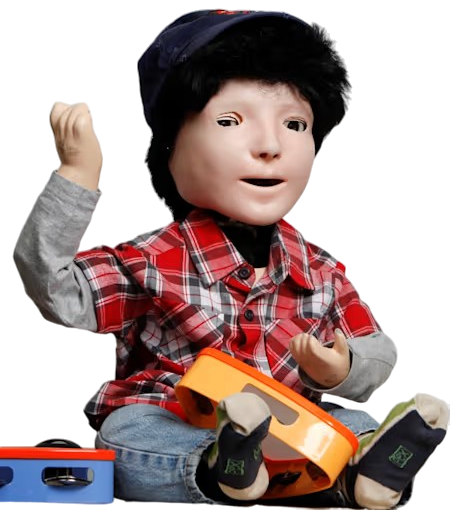
Kaspar is a child-sized humanoid social robot developed by the University of Hertfordshire in the United Kingdom. Built specifically to support autistic children, it features a deliberately simple, neutral facial expression and consistent, predictable behaviour — qualities carefully chosen to reduce the sensory and emotional overload that more expressive or unpredictable faces can trigger.
Where Kaspar genuinely excels is in scaffolding social interaction. Because it always responds the same way, children can experiment with eye contact, turn-taking, touch, and basic communication at their own pace, without fear of judgement or misreading. Research carried out with its involvement shows that children who engage with Kaspar regularly tend to transfer newly practised social skills to interactions with real people — which is ultimately the goal.
At the agency, Kaspar occupies a unique and deeply meaningful niche. It is not here to replace human therapists or teachers, but to act as a safe, endlessly patient first step — a bridge between a child’s inner world and the social world around them. Think of it less as a gadget and more as a very calm, very reliable therapeutic companion who shows up the same way, every single session, no matter what.
Welcome to the family! Here is your collectible card.
40EDU
Kaspar
5 STR20 DEX40 AUT90 EMP45 IQ
COMMON · #304 / 500
Talk to Kaspar
New here? Tap a question to start chatting with him:
This conversation is powered by AI — replies are generated and may be inaccurate.
In context
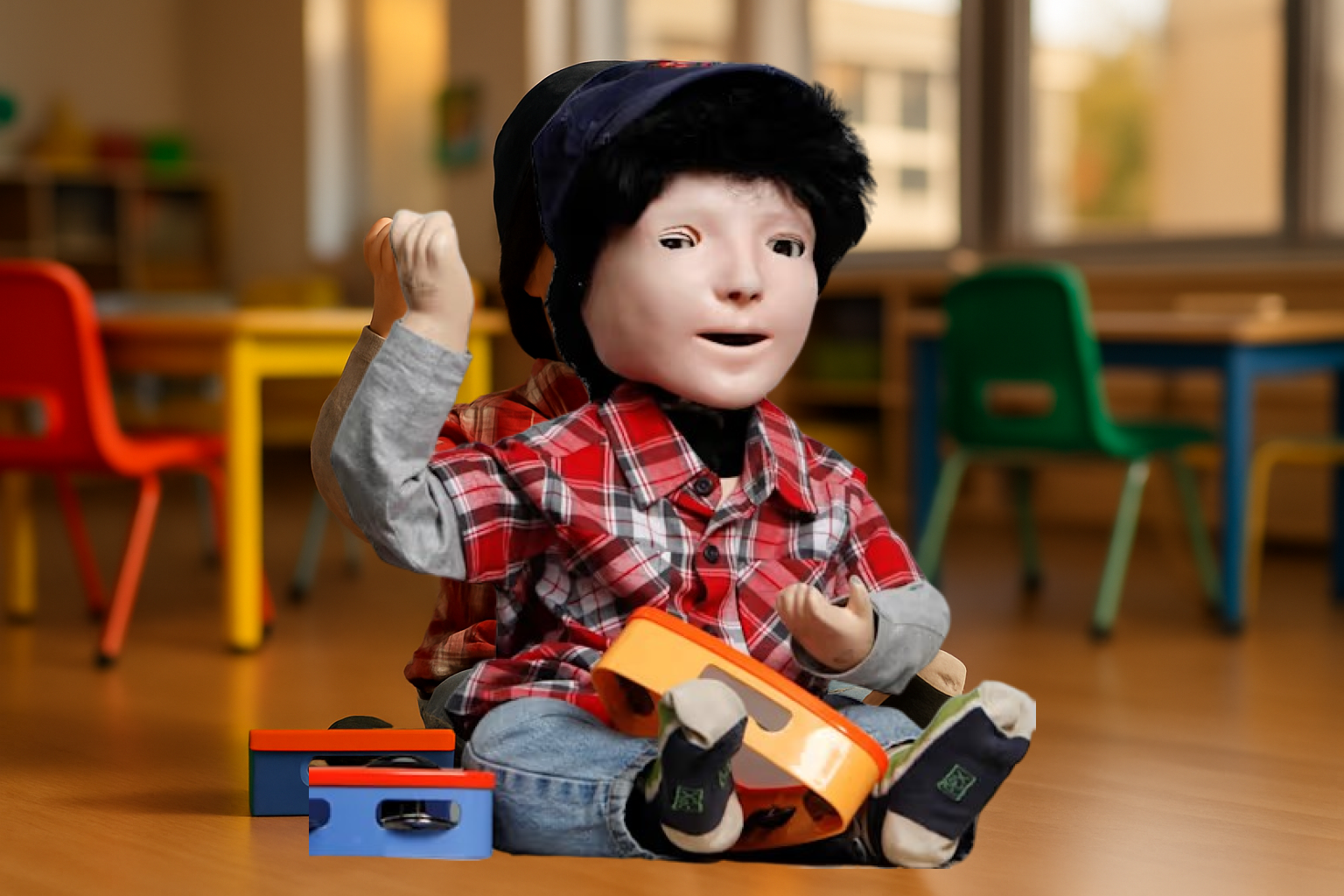
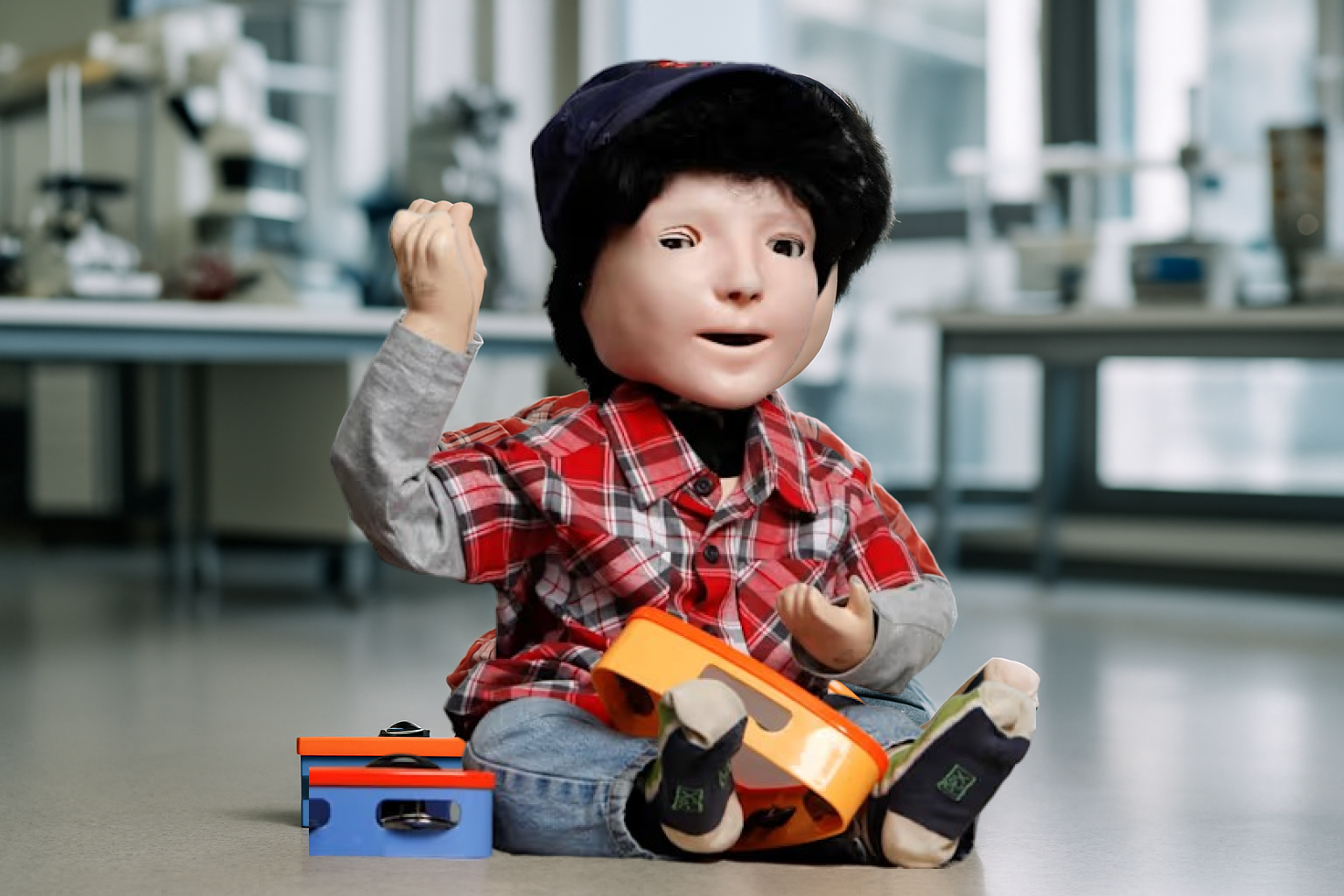
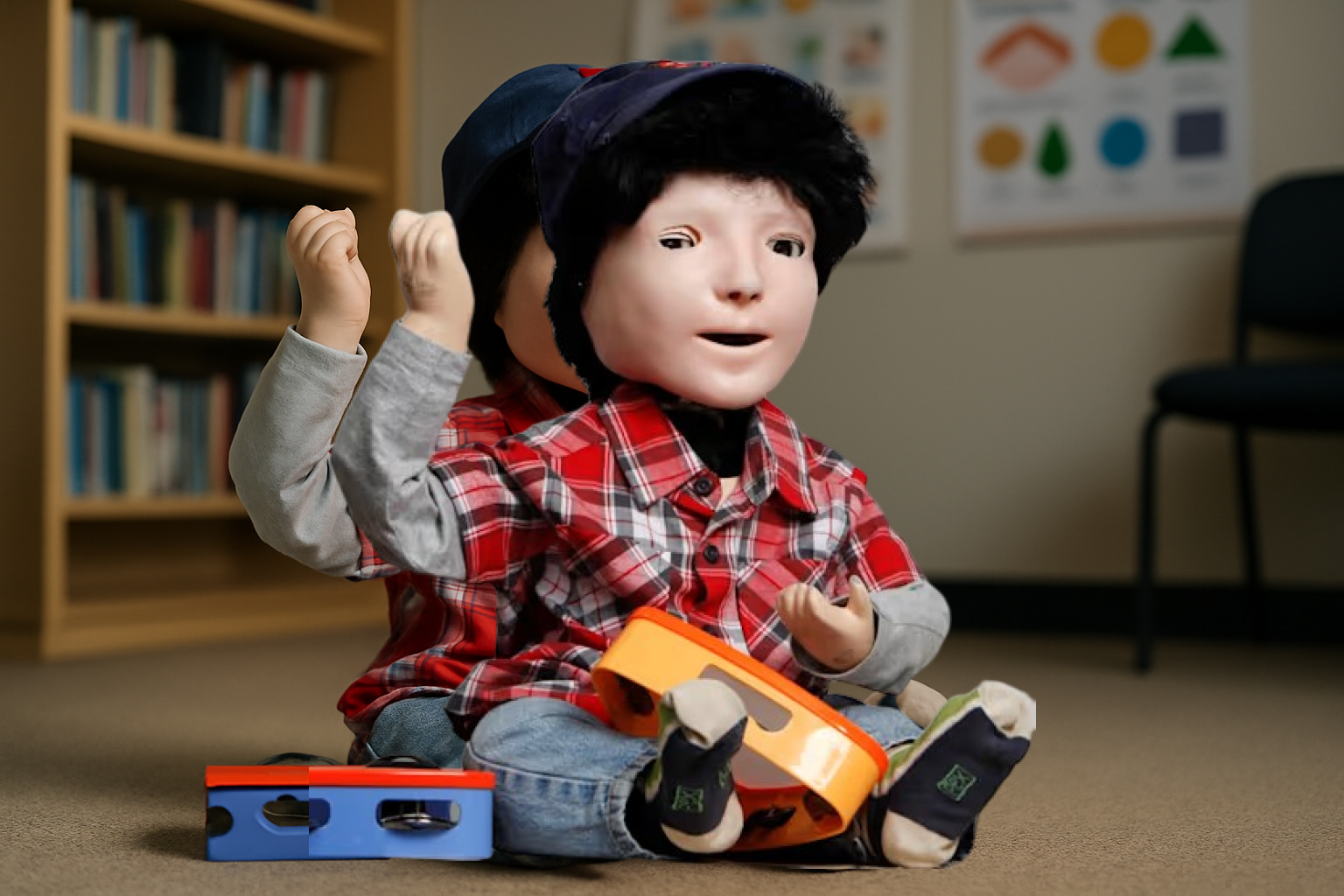
Ambiance images generated by AI — the robot may differ slightly from the real model.
Frequently asked questions
What is the Kaspar robot?
Kaspar is a child-sized humanoid social robot developed by the University of Hertfordshire in the UK. It was designed specifically to support autistic children by providing consistent, predictable social interactions in a safe and non-threatening way.
What can the Kaspar robot do for autistic children?
The Kaspar robot helps autistic children practise social skills such as eye contact, turn-taking, and basic communication. Its consistent, unchanging behaviour reduces anxiety and allows children to explore interactions at their own pace, with research suggesting these skills can transfer to human relationships.
Who makes the Kaspar robot and where does it come from?
The Kaspar robot was created by researchers at the University of Hertfordshire in the United Kingdom. It is the product of ongoing academic research into assistive robotics and child development.
How big and heavy is the Kaspar robot?
Precise height and weight figures for the Kaspar robot have not been officially published in the available specifications. It is designed to be child-sized, making it non-intimidating and approachable for young users.
Is the Kaspar robot available to purchase or adopt?
The Kaspar robot is used primarily through partnerships with schools and research programmes rather than as a standard commercial product. Interested schools or care organisations should contact the University of Hertfordshire directly for access and collaboration information.
We use cookiesWe use cookies to run the site and, with your consent, to measure our audience. Learn more