Outdoor terrain scout and surveyor · Search and rescue first responder in rough environments · Last-mile delivery across unstructured terrain · Infrastructure inspection in remote or hazardous zones
Strength55
Dexterity20
Autonomy65
Empathy15
IQ55
How we rate our robots
Each robot is scored from 0 to 100 on five traits, based on its real specs. When in doubt we score low, never flattering.
Strength — Lifting capacity, payload and raw power — how heavy a load it can handle.
Dexterity — Fine motor skills: hands, manipulation precision and speed of movement.
Autonomy — How long and how independently it runs — battery life and self-direction.
Empathy — Social & emotional skills: voice, expressions and interaction with people.
IQ — On-board intelligence: perception, reasoning and ability to learn.
“Like a seasoned ultramarathon runner who thrives on mountain trails and never complains about mud — relentless, sure-footed, and built for the long haul.”
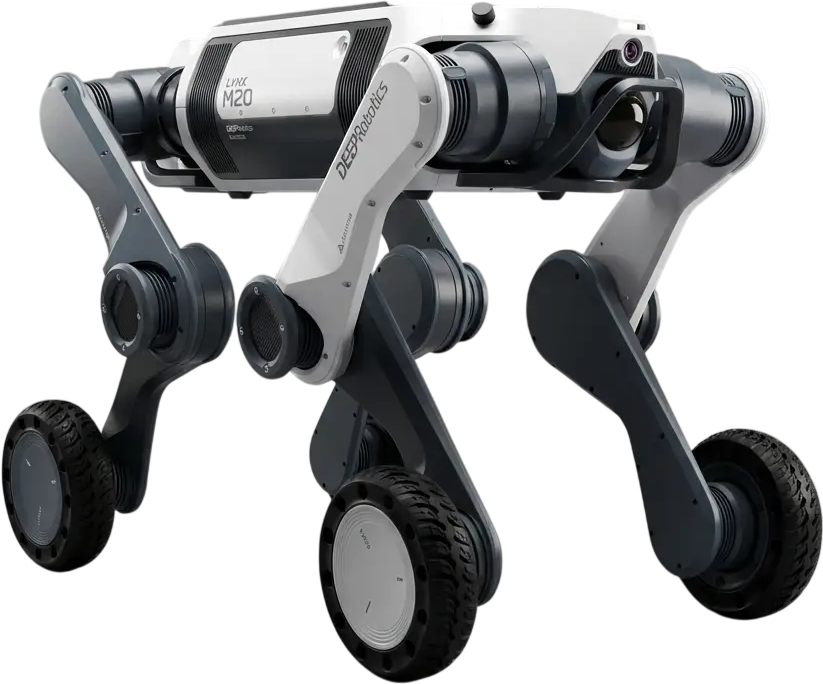
The DEEP Robotics Lynx is a wheel-legged quadruped robot designed and built by DEEP Robotics, a Chinese robotics company specialising in legged locomotion. Its defining feature is a hybrid wheel-legged architecture: four limbs that can roll at speed on smooth surfaces and step actively over rocks, roots, and uneven ground. This makes it one of the rare robots genuinely at home in the messy, unpredictable outdoors rather than just in a controlled lab.
Where most robots slow down or give up when the terrain turns rough, the Lynx shifts modes. Its wheel-legged design lets it accelerate efficiently on paths while its active legs absorb obstacles, drops, and inclines that would strand a purely wheeled platform. It is built for the kind of real-world fieldwork — scouting, inspection, delivery — that demands both speed and resilience across changing ground conditions.
At the agency, we place the Lynx firmly in the athletes family. It is not here to fetch you a coffee or hold a conversation — it is here to cover ground, push through conditions, and get the job done when the environment is working against you. If your operation takes you off the beaten path, the Lynx is the one you want in your corner.
Welcome to the family! Here is your collectible card.
42ATH
DEEP Robotics Lynx
55 STR20 DEX65 AUT15 EMP55 IQ
COMMON · #107 / 500
Talk to DEEP Robotics Lynx
New here? Tap a question to start chatting with him:
This conversation is powered by AI — replies are generated and may be inaccurate.
In context
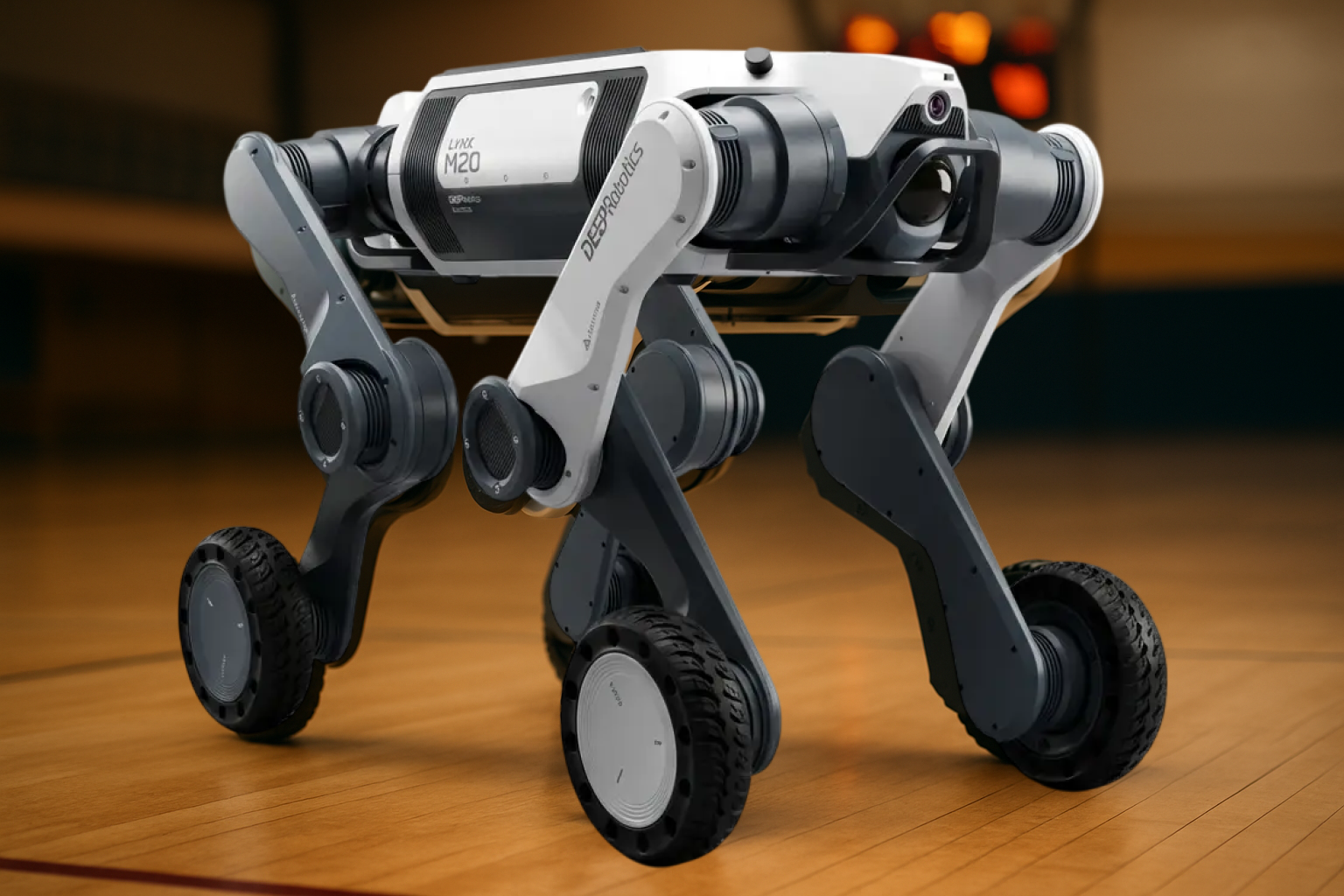
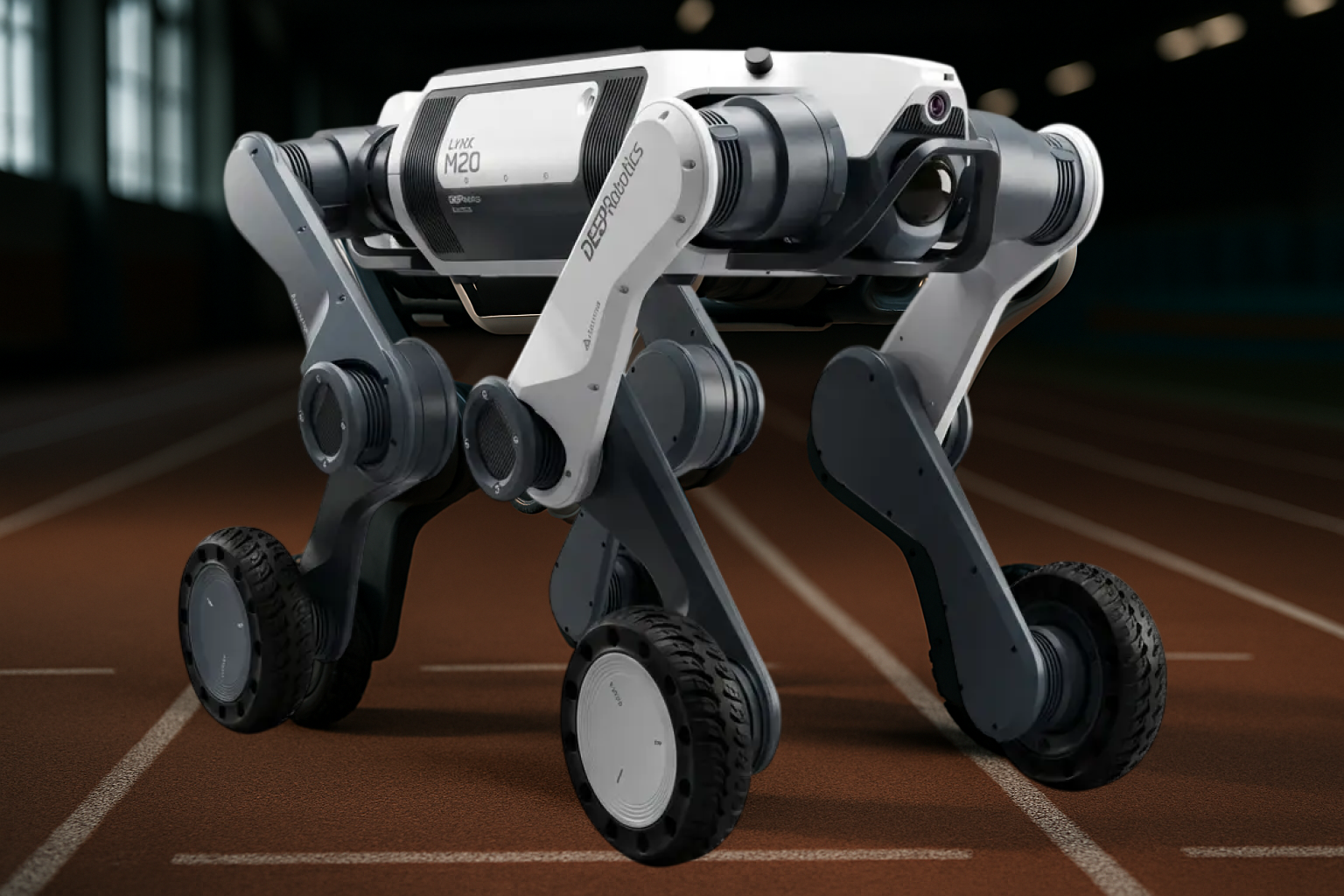
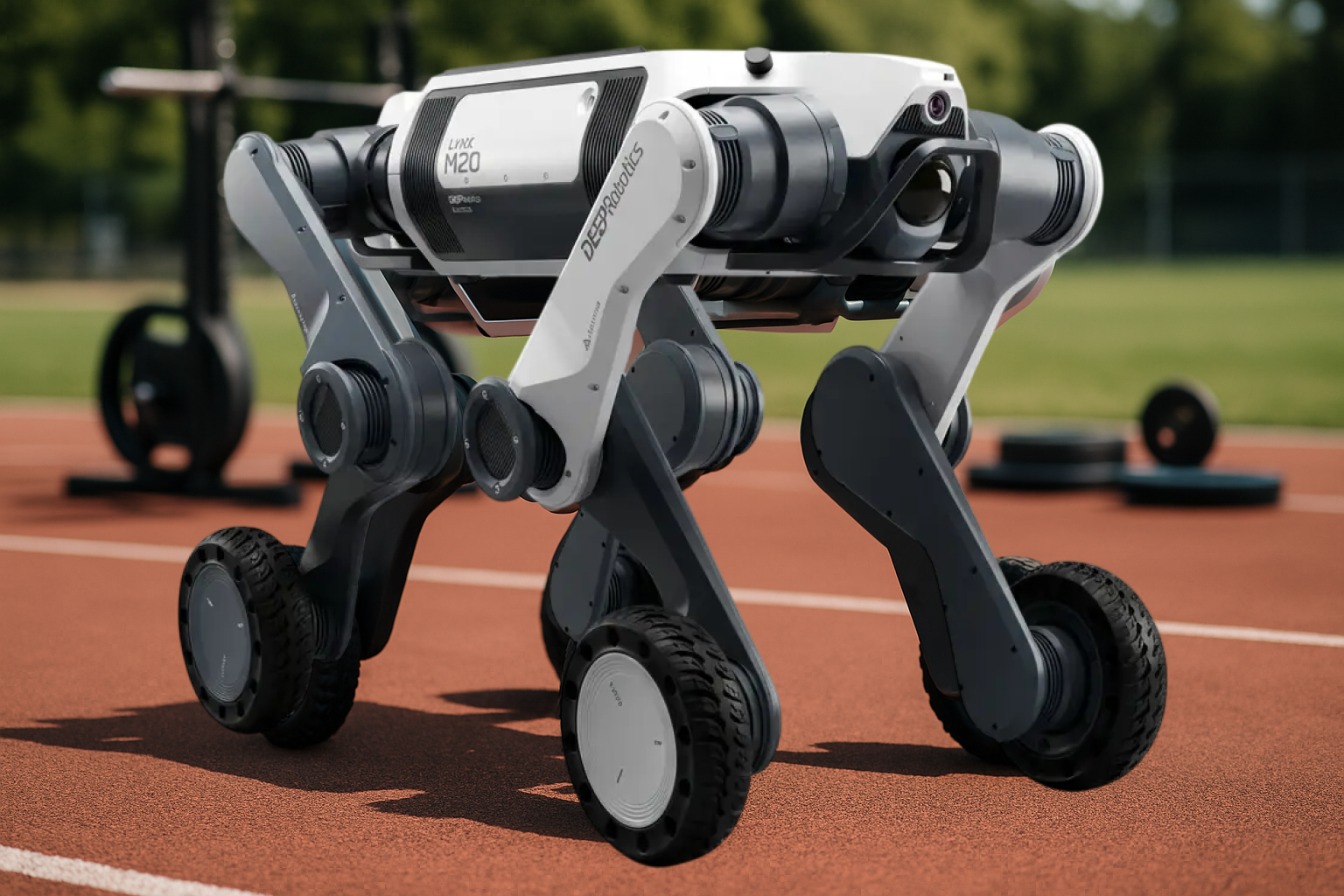
Ambiance images generated by AI — the robot may differ slightly from the real model.
Frequently asked questions
What is the DEEP Robotics Lynx robot?
The DEEP Robotics Lynx is a wheel-legged quadruped robot built for all-terrain outdoor operation. It combines wheeled locomotion for speed with active legged movement to handle rough and unstructured terrain. It is designed and manufactured by DEEP Robotics in China.
What can the DEEP Robotics Lynx robot be used for?
The Lynx robot is suited for outdoor fieldwork including terrain scouting, remote infrastructure inspection, search and rescue support, and last-mile delivery across environments that wheeled or tracked robots struggle with. Its hybrid locomotion gives it versatility across changing ground conditions.
Who makes the DEEP Robotics Lynx robot and where is it from?
The Lynx robot is made by DEEP Robotics, a Chinese company specialising in legged and wheel-legged robotic platforms. DEEP Robotics is headquartered in China and focuses on high-mobility robots for real-world deployment.
What type of locomotion does the DEEP Robotics Lynx robot use?
The Lynx robot uses a wheel-legged hybrid system mounted on four limbs. It can roll efficiently on relatively flat surfaces and switch to active legged stepping to navigate obstacles, steps, and rough outdoor terrain.
Is the DEEP Robotics Lynx robot available to buy or deploy?
The Lynx robot is listed as available from DEEP Robotics. For pricing, lead times, and deployment options, it is best to contact DEEP Robotics directly, as commercial terms vary by region and use case.
We use cookiesWe use cookies to run the site and, with your consent, to measure our audience. Learn more